DSSR-enabled G4 identification/annotation: PDB entry 9tnq
Summary information and primary citation
- PDB-id
- 9tnq
- Class
- DNA
- Method
- NMR
- Summary
- L41 g-quadruplex-forming aptamers targeting hmgb1 protein
- Reference
- Trajkovski M, Platella C, Musumeci D, Napolitano E, Esposito CL, Catuogno S, Plavec J, Montesarchio D (2026): "Unraveling the NMR structures of G-quadruplex-forming aptamers acting as inhibitors of High Mobility Group Box 1 (HMGB1) pathological activity." Int.J.Biol.Macromol., 357, 151585. doi: 10.1016/j.ijbiomac.2026.151585.
- Abstract
- High Mobility Group Box 1 (HMGB1) is a valuable therapeutic target in inflammatory, autoimmune diseases, and cancer. Recently, some of us identified a set of anti-HMGB1 aptamers, folding into G-quadruplex structures of different topology. Among them, L12 and L41 were the most effective aptamers as for affinity and activity towards the protein. Here, nuclear magnetic resonance (NMR) spectroscopy, corroborated by size exclusion high performance liquid chromatography (SE-HPLC) and circular dichroism (CD), allowed defining the structural features of L12 and L41. In-depth structural details were obtained for the monomeric forms of these aptamers in a K<sub>+</sub>-rich (100 mM K<sub>+</sub>) buffer, mimicking the intracellular environment. Under these conditions, both L12 and L41 folded in hybrid G-quadruplex structures. By cross-referencing the obtained data, we inferred that these structures were also the main monomeric folded species in the Na<sub>+</sub>-rich Phosphate Buffered Saline (PBS) buffer, mimicking the extracellular environment, suggesting that these aptamers share similar recognition patterns when interacting with the target protein. However, in PBS a higher amount of hybrid-2 G-quadruplex was observed for L12 than L41. Biolayer interferometry (BLI) analysis demonstrated a preference of HMGB1 for L12 over L41, in line with in vitro assays, showing higher ability to inhibit the HMGB1-induced cell migration for L12 than L41. These findings suggest that HMGB1 recognizes the hybrid-2 G-quadruplex folding of these aptamers, present in higher degree in L12 than L41. In summary, this work provides precious insights into the conformational preferences of L12 and L41, of crucial importance to design more effective HMGB1 inhibitors.
- G4 notes
- 3 G-tetrads, 1 G4 helix, 1 G4 stem, UDUU, hybrid3, 3+1, 3(-Lw-Ln-P)
Cartoon-block schematics in six views (download the tarball)
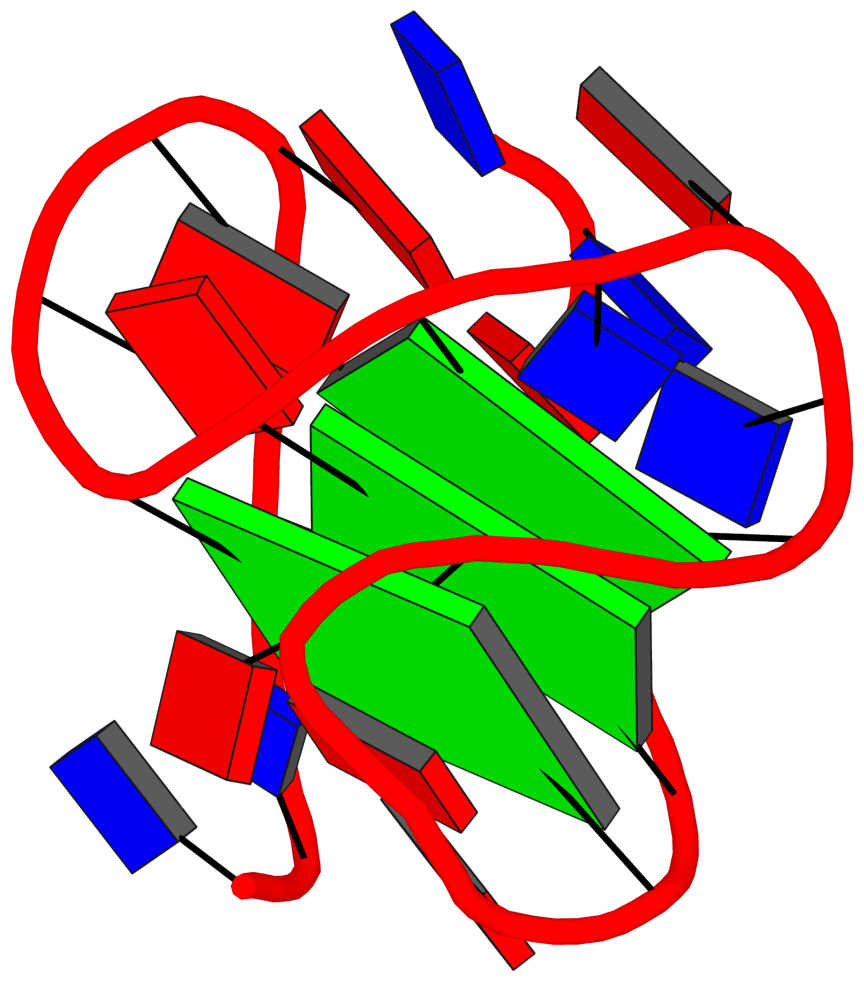
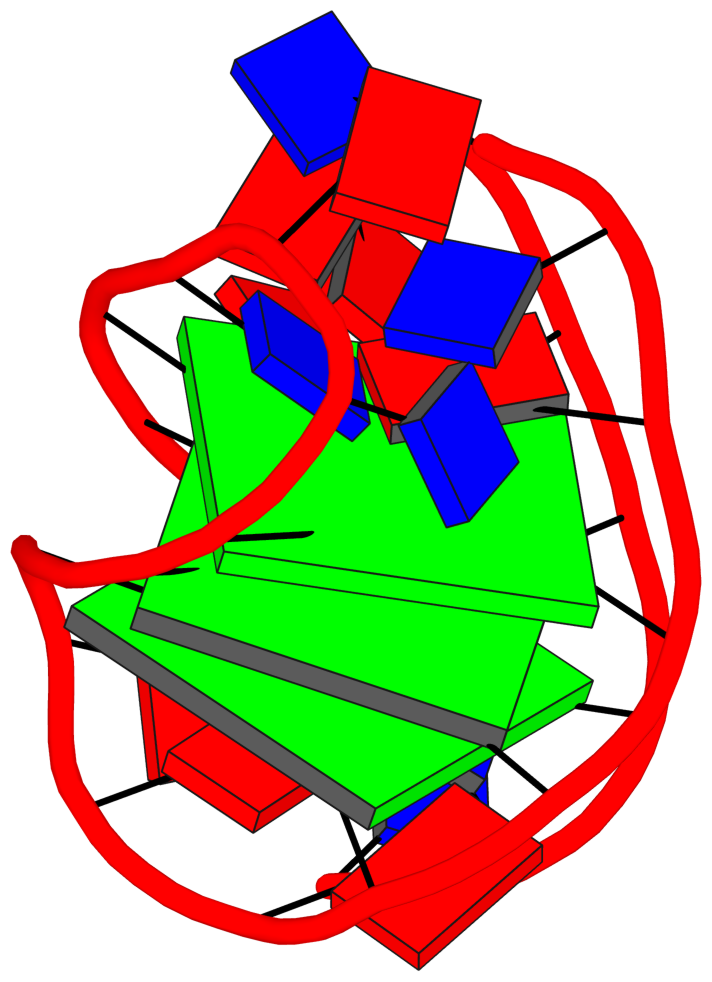
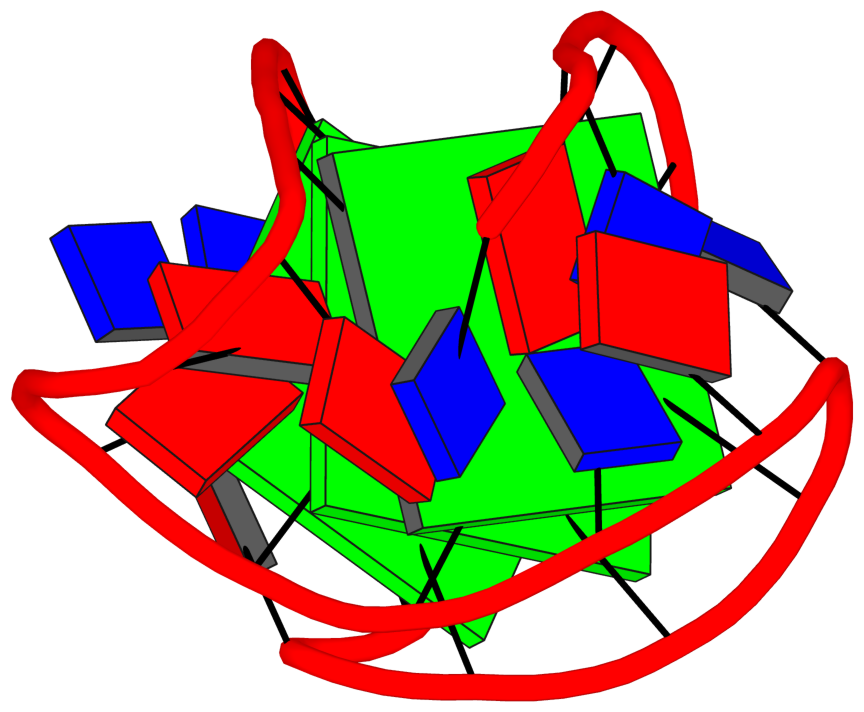
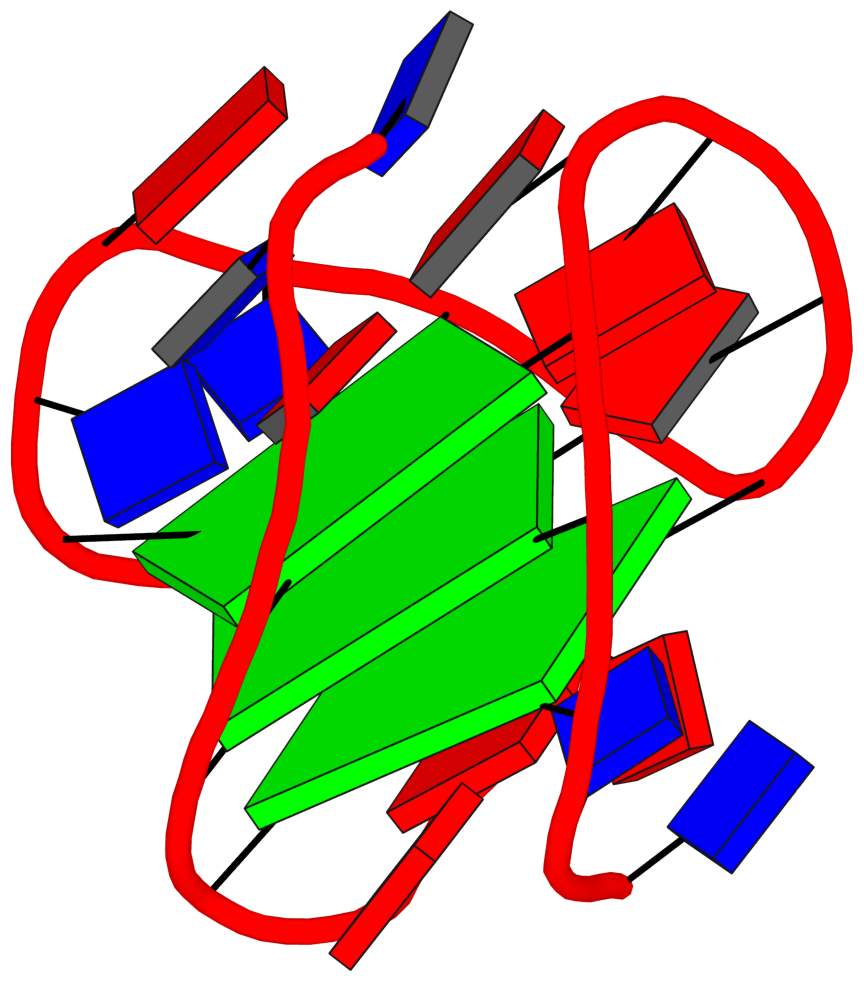
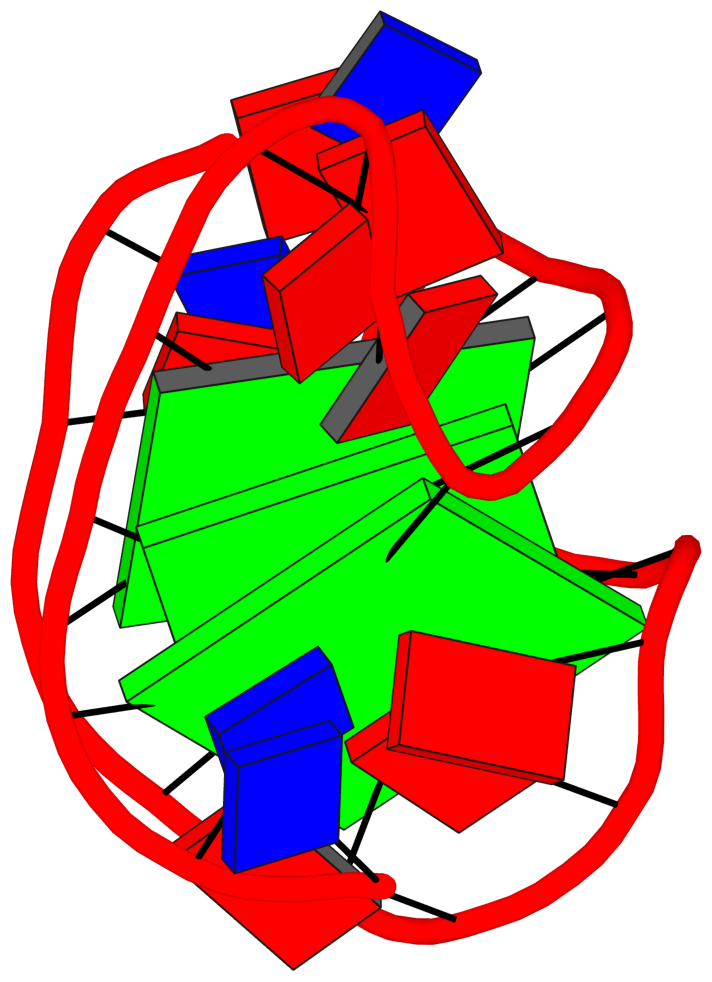
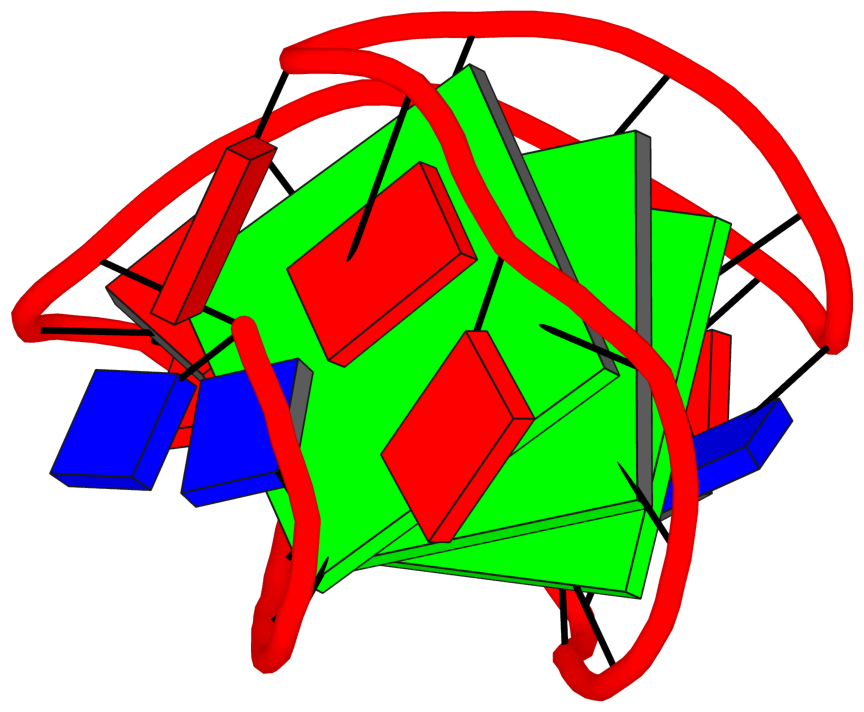
List of 3 G-tetrads
 1 glyco-bond=s-ss sugar=---- groove=wn-- planarity=0.343 type=bowl-2 O- nts=4 GGGG A.DG4,A.DG12,A.DG16,A.DG22
 2 glyco-bond=-s-- sugar=---. groove=wn-- planarity=0.263 type=other  O+ nts=4 GGGG A.DG5,A.DG11,A.DG17,A.DG23
 3 glyco-bond=-s-- sugar=---- groove=wn-- planarity=0.170 type=other  O+ nts=4 GGGG A.DG6,A.DG10,A.DG18,A.DG24
List of 1 G4-helix
In DSSR, a G4-helix is defined by stacking interactions of G-tetrads, regardless of backbone connectivity, and may contain more than one G4-stem.
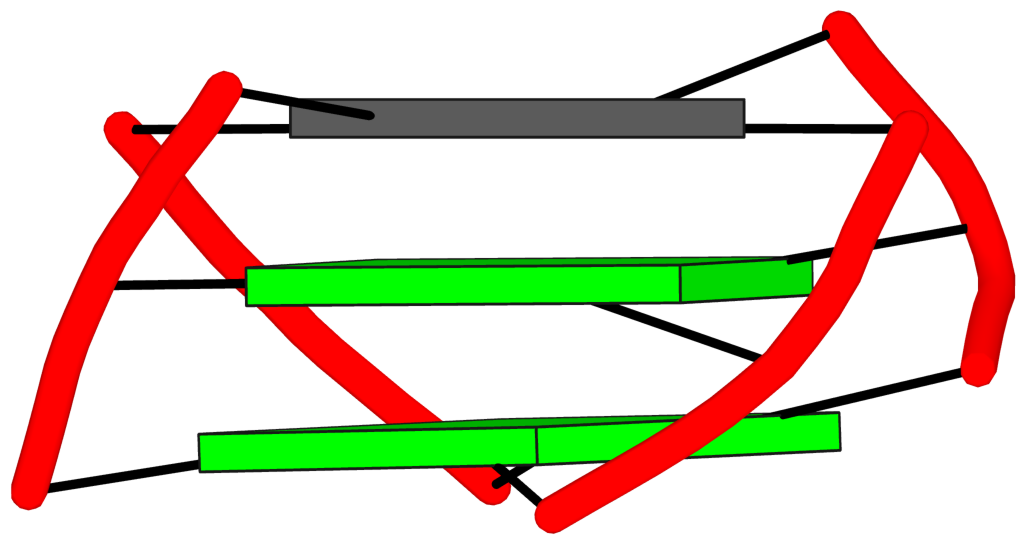
Helix#1, 3 G-tetrads, INTRA-molecular, with 1 stem
|
1 glyco-bond=s-ss sugar=---- groove=wn-- Major-->WC O- nts=4 GGGG A.DG4,A.DG12,A.DG16,A.DG22 2 glyco-bond=-s-- sugar=---. groove=wn-- WC-->Major O+ nts=4 GGGG A.DG5,A.DG11,A.DG17,A.DG23 3 glyco-bond=-s-- sugar=---- groove=wn-- WC-->Major O+ nts=4 GGGG A.DG6,A.DG10,A.DG18,A.DG24 step#1 mm(<>,outward) area=17.28 rise=3.46 twist=16.9 step#2 pm(>>,forward) area=14.79 rise=3.39 twist=25.0 strand#1 DNA glyco-bond=s-- sugar=--- nts=3 GGG A.DG4,A.DG5,A.DG6 strand#2 DNA glyco-bond=-ss sugar=--- nts=3 GGG A.DG12,A.DG11,A.DG10 strand#3 DNA glyco-bond=s-- sugar=--- nts=3 GGG A.DG16,A.DG17,A.DG18 strand#4 DNA glyco-bond=s-- sugar=-.- nts=3 GGG A.DG22,A.DG23,A.DG24 |
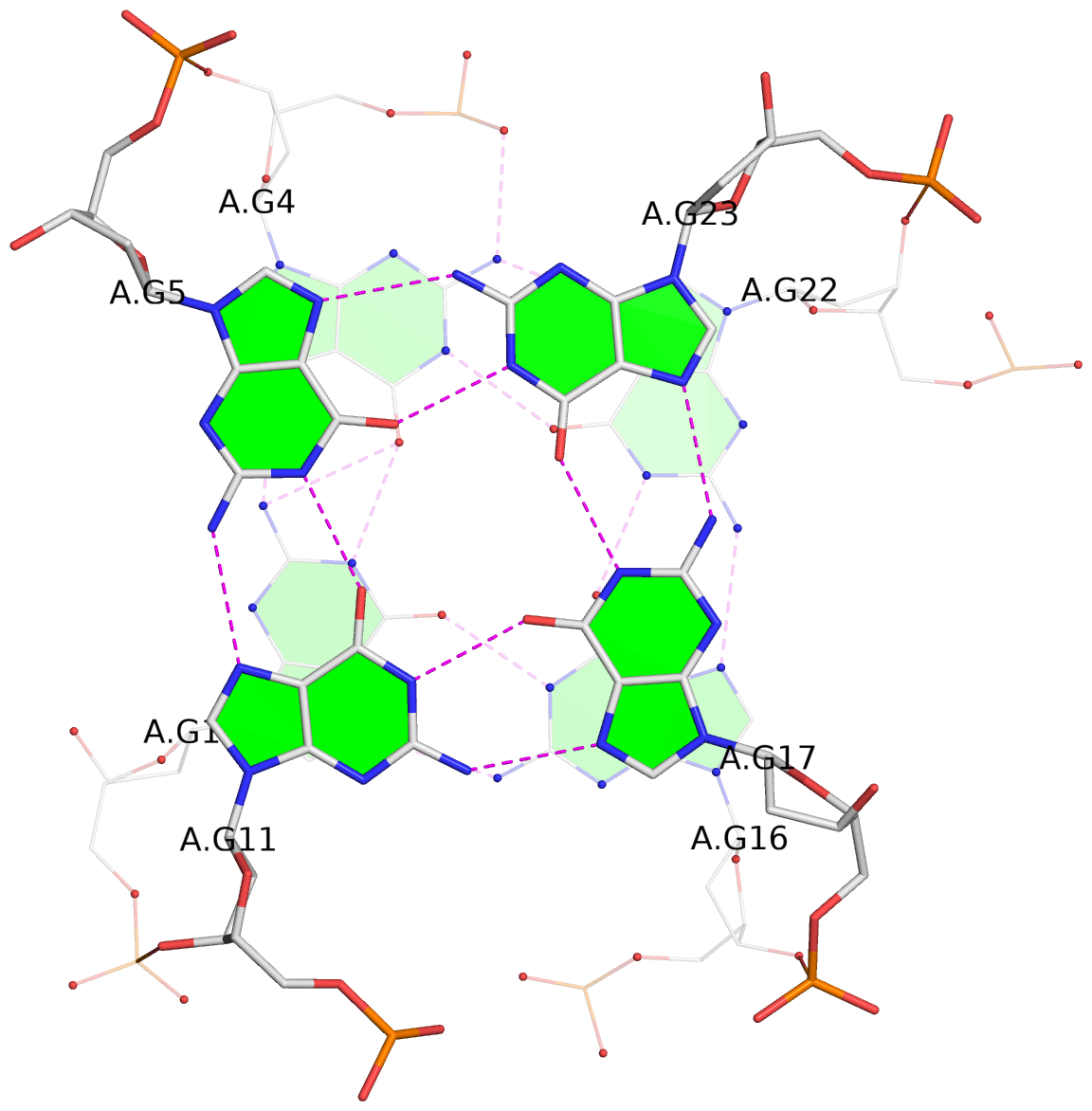
| 2 stacking diagrams | |
|
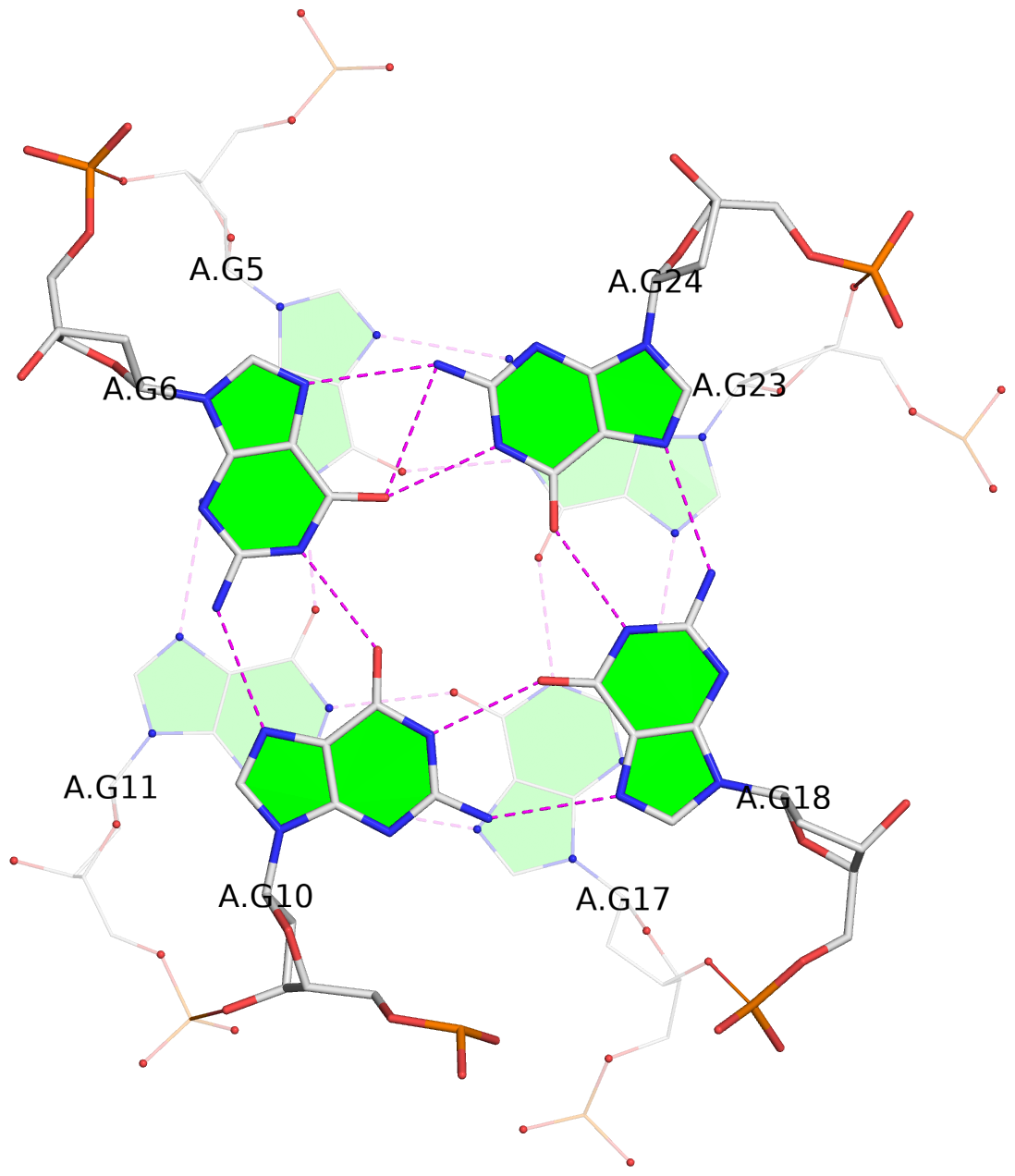
1 glyco-bond=s-ss sugar=---- groove=wn-- Major-->WC O- nts=4 GGGG A.DG4,A.DG12,A.DG16,A.DG22 |
|
2 glyco-bond=-s-- sugar=---. groove=wn-- WC-->Major O+ nts=4 GGGG A.DG5,A.DG11,A.DG17,A.DG23 |
List of 1 G4-stem
In DSSR, a G4-stem is defined as a G4-helix with backbone connectivity. Bulges are also allowed along each of the four strands.
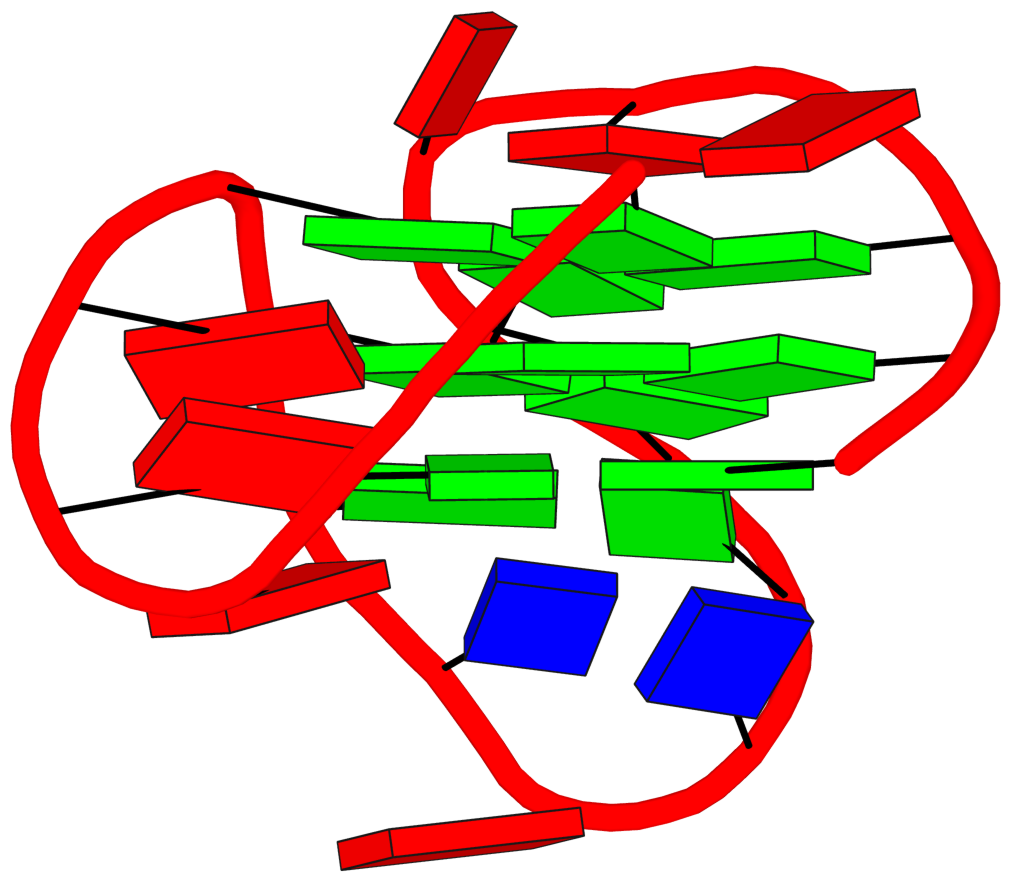
Stem#1, 3 G-tetrads, 3 loops, INTRA-molecular, UDUU, hybrid3, 3+1, 3(-Lw-Ln-P)
|
1 glyco-bond=s-ss sugar=---- groove=wn-- Major-->WC O- nts=4 GGGG A.DG4,A.DG12,A.DG16,A.DG22 2 glyco-bond=-s-- sugar=---. groove=wn-- WC-->Major O+ nts=4 GGGG A.DG5,A.DG11,A.DG17,A.DG23 3 glyco-bond=-s-- sugar=---- groove=wn-- WC-->Major O+ nts=4 GGGG A.DG6,A.DG10,A.DG18,A.DG24 step#1 mm(<>,outward) area=17.28 rise=3.46 twist=16.9 step#2 pm(>>,forward) area=14.79 rise=3.39 twist=25.0 strand#1 U DNA glyco-bond=s-- sugar=--- nts=3 GGG A.DG4,A.DG5,A.DG6 strand#2 D DNA glyco-bond=-ss sugar=--- nts=3 GGG A.DG12,A.DG11,A.DG10 strand#3 U DNA glyco-bond=s-- sugar=--- nts=3 GGG A.DG16,A.DG17,A.DG18 strand#4 U DNA glyco-bond=s-- sugar=-.- nts=3 GGG A.DG22,A.DG23,A.DG24 loop#1 type=lateral strands=[#1,#2] nts=3 AAA A.DA7,A.DA8,A.DA9 loop#2 type=lateral strands=[#2,#3] nts=3 TAT A.DT13,A.DA14,A.DT15 loop#3 type=propeller strands=[#3,#4] nts=3 AAA A.DA19,A.DA20,A.DA21 |